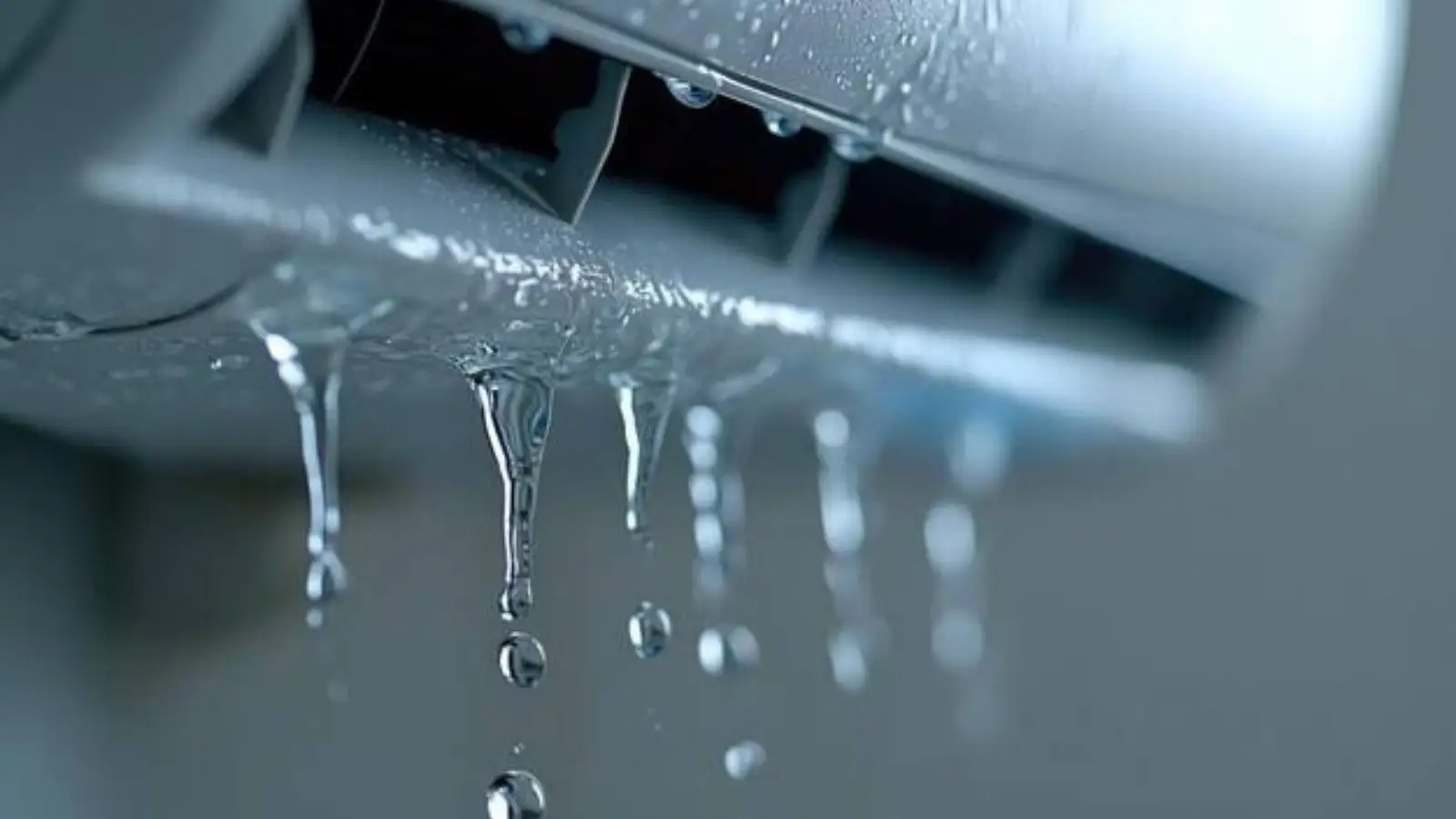
How an AC System Leaks Water Into a Building
Air conditioners pull moisture out of the air, and that water has to go somewhere. It drips into a pan and drains through a condensate line. When the line clogs with algae and sludge, or a pan rusts through, the water overflows into the ceiling or wall. A coil that freezes and thaws can also dump water in one burst.
Air handlers often sit in attics, closets and mechanical rooms, so leaks start out of sight. A small drip into insulation can run for weeks, so by the time a stain appears the ceiling is already well soaked.
Summer Heat and Cooling Load
The National Weather Service Los Angeles/Oxnard 1991 to 2020 normals for Downtown Los Angeles put the average July high at 82.0 degrees and the August high at 84.0 degrees, with mean temperatures of 73.3 and 74.7 degrees. Systems run for long hours in those months, and every hour makes condensate.
The same table gives 65.8 degrees as the annual mean, so air conditioning is a seasonal load, and a drain line that sits unused through winter can fill with sludge before the first hot spell.
U.S. Census Bureau QuickFacts shows an owner-occupied rate of 41.0 percent for 2020 to 2024. Renters should report an AC leak to the landlord in writing.
Source type: Sources: National Weather Service Los Angeles/Oxnard normals and U.S. Census Bureau QuickFacts.
What You See and What It Means
| What you see | What it usually means | What to do |
|---|---|---|
| Ceiling stain under an attic air handler | Condensate line or pan is overflowing | Turn the AC off and call |
| Water at a wall unit or closet floor | Drain is clogged or the pan failed | Turn the AC off and dry the area |
| Ice on the coil or lines | Airflow or refrigerant problem, then melt water | Turn the system off and call an HVAC tech |
| Musty smell when the AC runs | Moisture in ducts, insulation or the cavity | Call for moisture mapping |
| Dripping vent or grille | Water is in the duct or ceiling cavity | Turn the AC off and call fast |
AC Leak Safety: The First Hour
Turn the system off at the thermostat and at the breaker for the air handler. A running unit keeps producing condensate, and a wet unit near wiring is a shock risk. Then keep clear of any ceiling that is holding water.
Switch the system off
Use the thermostat and the air handler breaker if you can reach them safely.
Do not touch wet wiring
Stay back from the unit if water is on or around electrical parts.
Catch the drip
Place a bucket under it and move furniture out of the area.
Check the ceiling
A bulging ceiling can fall. Stay out from under it.
Call us and an HVAC tech
We dry the building. A technician clears the drain or repairs the unit.
AC water spreading through the ceiling?
Turn the system off and call. The dispatcher will help you slow the damage.
How We Dry and Repair After an AC Leak
We scan the ceiling and wall with a moisture meter and a thermal imaging camera to find the wet area. Wet insulation is removed, and soft drywall is cut out. Because the leak is usually clean condensate, much of the structure can dry in place, but the growth of mold is a concern with long-running leaks.
Air movers and LGR dehumidifiers dry the cavity, and readings are taken each day. When the cavity is dry, drywall, texture and paint can be repaired. The HVAC contractor should clear or replace the drain, or the leak returns. Moisture readings and drying goals are described in the ANSI/IICRC S500 standard.
What Affects the Cost of AC Leak Repair
AC leaks range from one stain to a long-hidden attic problem. These five factors matter most.
How long it leaked
Weeks of dripping soak insulation and framing.
Attic or ceiling access
Tight spaces raise labor.
Ceiling area affected
More wet ceiling means more removal and repair.
Drying days
Damp insulation and framing around a unit hold water, so drying days add up.
Repair scope
Drywall, texture and paint are priced separately.
Coverage often turns on whether the leak was sudden or gradual. Policies differ on this, so your insurer is the one to ask. Reach the crew at (424) 550-5662 to go over the ceiling or wall in question, with the price explained before work.
Insurance Fit for AC Leaks
Many policies treat a sudden overflow differently from seepage over time. Long-term drips from a neglected drain line are often classed as maintenance, and the damage may not be covered. A sudden pan failure or burst line is more likely to be treated as an accident.
HVAC service records can help. Keep any invoices for drain cleaning, and ask your insurer what documentation they need.
Prevention and Mistakes to Avoid
- Running the AC after water appears at the unit
- Treating a ceiling stain as cosmetic and painting over it
- Skipping the annual drain line flush
- Forgetting to install a float switch on the drain pan
- Closing the ceiling before the cavity is dry
A float switch shuts the unit off when the pan fills. It is a small part that prevents a large repair.
Common questions
Yes. Water coming through a ceiling gets the same answer at any hour. Switch the system off, call, and a crew is sent the same day when one can be.
Not until the leak is stopped. Turn it off and have a technician check the drain and pan.
It is generally clean, though it can carry algae and sludge from the pan or line. Slow leaks into insulation can lead to mold.
No. An HVAC contractor repairs the system. We dry the structure and repair the water damage.
Photograph the damage and tell building management in writing. We document moisture in your unit and the parties sort out responsibility.
If the ceiling is stained, see water damage repair for the rebuild, and water mitigation for the drying stage. AC leaks in Beverly Hills and West Hollywood get the same crews, with ZIP codes on the service area page.