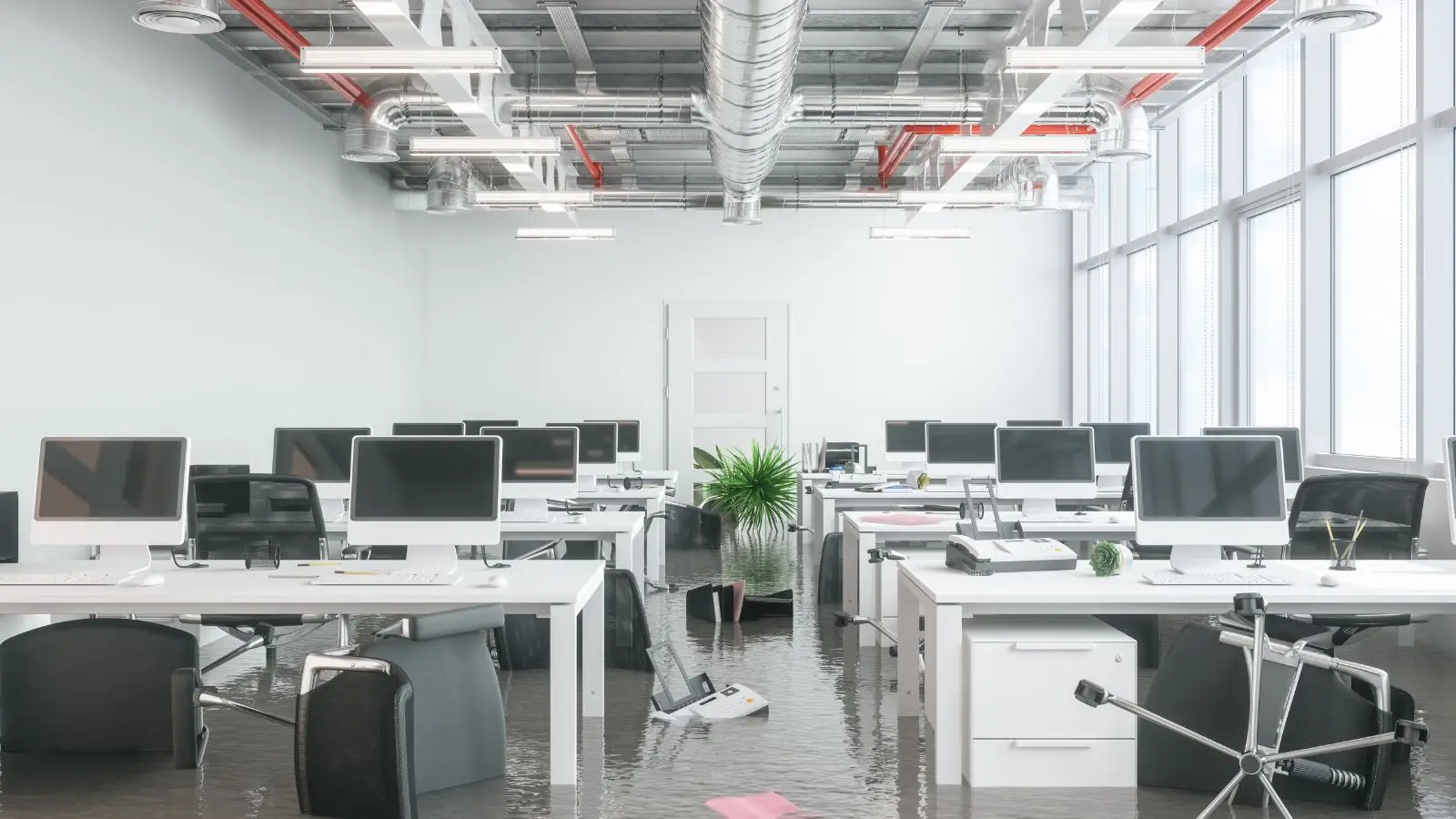
What We Can Do for a Commercial Water Loss
Commercial water loss uses the same restoration steps as a home: stop the spread, extract water, dry the structure, clean and document. What differs is the setting. The space may be shared, ownership may be split between a landlord and a tenant, and several parties may need records.
We provide water extraction, structural drying, cleanup of wet materials and moisture documentation for commercial space in Beverly Hills. We do not make promises about arrival times, and we do not list clients or certifications. What we do is answer the line at any hour and explain the scope and price before work starts.
City Requirements for Commercial Space
According to the City of Beverly Hills Business Tax page, businesses must obtain a Business Tax Registration Certificate, and the city's starting-a-business page says a certificate of occupancy is required before moving into a business location. A water loss does not change either, but repairs that alter a space may involve Building and Safety.
The City of Beverly Hills Fire Department page lists a non-emergency number of (310) 550-4900 and says fire stations are staffed 24 hours a day. In an active emergency call 911.
Building and Safety schedules permit appointments at (310) 285-1141.
Source type: Sources: City of Beverly Hills Business Tax page, starting-a-business page and Fire Department page.
What You See and What It Means
| What you see | What it usually means | What to do |
|---|---|---|
| Ceiling tiles stained or sagging | Water is above the ceiling | Clear the area and call |
| Water at a restroom or kitchen area | A fixture, supply or drain failed | Close the valve and call |
| Wet carpet tile or floor | Water spread across the floor | Call for extraction |
| Water on an upper floor | It may be reaching units below | Notify management and call |
| Alarm from a sprinkler or leak sensor | A pipe or head may have discharged | Follow building procedure and call |
Commercial Water Safety: The First Hour
Shut off the water at the nearest valve, or ask management to shut the riser. Make sure people are out of areas with sagging ceilings or wet floors, and switch off power to wet areas if you can reach panels on dry ground. Then notify the property manager or landlord, because the building may have an emergency procedure.
Close the valve
Use the nearest shutoff or ask management for the riser.
Clear people
Keep staff and visitors away from wet floors and ceilings.
Power and data
Move or shut down equipment away from water. Switch off breakers from dry ground only.
Notify in writing
Tell the property manager and your insurer, and note the time.
Photograph before moving
Photos of the water, ceilings and equipment support the claim.
Commercial space taking on water?
Call the 24/7 line. Written notice to management should go out at the same time.
Our Process for Commercial Space
The crew starts with extraction using pumps and extractors, then maps moisture with meters and thermal imaging. Ceiling tiles, carpet tile, wet drywall and insulation are removed where they cannot dry. Air movers and LGR dehumidifiers dry the space, and readings are taken each day.
Work can be planned around building access rules, elevators and quiet hours where the space allows. Moisture readings, photos and a drying log are kept so the landlord, tenant and insurer can read the same record. We explain what we found and do not decide who is responsible. The ANSI/IICRC S500 standard is a published reference for this kind of documentation.
What Affects the Cost of Commercial Water Damage Restoration
Commercial jobs depend on scale and access. These five factors matter most.
Area and number of floors
Larger affected space needs more equipment.
Water category
Clean water, gray water and black water follow different cleaning rules.
Materials
Ceiling grids, carpet tile and drywall come out more readily than concrete.
Access and hours
Building rules and after-hours work affect scheduling.
Drying days and rebuild scope
Equipment time and rebuilding are priced separately.
Coverage often depends on cause, lease terms and policy wording. Your policy wording decides, so read it or ask your insurer. Call (424) 550-5662 with the building and floor details, and scope and price are shared before the work.
Insurance, Leases and Who Pays
In commercial space, several policies can be involved. A building owner's policy often covers the structure, while a tenant's policy often covers contents and improvements. Your lease sets who is responsible for what. Sudden pipe failure is treated differently from slow seepage, and flood is usually covered separately.
We do not decide responsibility. We provide records so the parties can. Read your lease and policy, and ask your insurer and property manager.
Mistakes to Avoid in Commercial Space
- Removing damaged materials before photographing them
- Delaying written notice to the landlord or manager
- Leaving wet ceiling tiles and carpet tile in place
- Moving electronics and records without a plan
- Assuming the building will handle drying
Common questions
Yes. Commercial calls are taken at all hours, and a crew is sent the same day when one is available, with notice to management happening in parallel.
Work is planned around building access and conditions. Tell the dispatcher what the building allows.
Call us, and notify the property manager or landlord in writing and your insurer.
Yes. Moisture readings, photos and a drying log are kept and can be shared.
Often, with planning. Equipment placement, noise and access are discussed before the work starts.
For the first response, see water mitigation, and for the drying process, see structural drying. Commercial calls come from Beverly Hills and West Hollywood, with ZIP codes on the service area page.