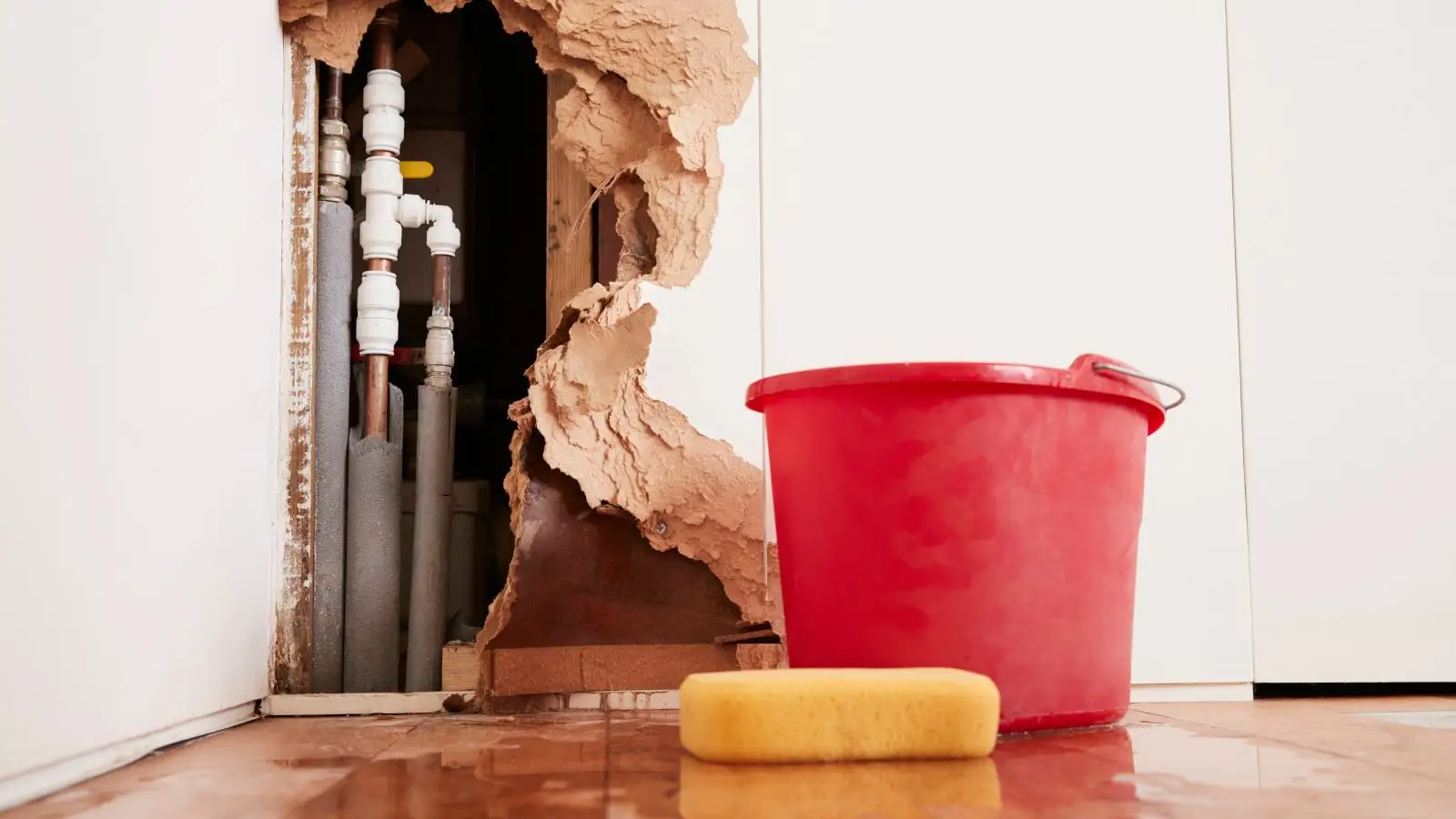
How a Burst Pipe Floods a Beverly Hills Building
A pipe bursts when something gives way, not when it is merely old. A corroded elbow splits, a compression fitting slips, a supply line to a toilet or sink fails at its crimp, or a line behind a wall is nicked during other work. The result is pressurized water, often at household pressure, pouring into a wall or ceiling cavity where nobody can see it.
In a house, that water usually drops straight down inside the wall and soaks insulation, baseboards and subfloor before a stain appears. In a stacked condo on Wilshire Boulevard, it can run through the floor slab edges into the unit below and keep going. Speed matters because the pipe does not stop on its own.
Beverly Hills Facts for Pipe Failures
According to the City of Beverly Hills 2020 Urban Water Management Plan, the city's water distribution system consists of 170 miles of water mains and serves 10,662 municipal water service connections. That is a lot of pressurized pipe, and the same pressure runs up to the private lines inside each building.
Repairs that open walls or touch plumbing may need a permit. The city's Building and Safety page lists its permit center at 455 N. Rexford Drive, first floor, with appointments scheduled at (310) 285-1141. Ask the permit center whether your repair needs one.
Source type: Sources: City of Beverly Hills 2020 Urban Water Management Plan and City of Beverly Hills Building and Safety page.
What You See and What It Means
| What you see or hear | What it usually means | What to do |
|---|---|---|
| Sudden hiss or rushing sound in a wall | A pressurized line is open inside the cavity | Shut the main valve and call |
| Bubbling paint or a dark, spreading stain on drywall | Water has been moving behind the surface for a while | Mark the edge with a pencil and call |
| Water running from a ceiling light or vent | A line above is discharging into the ceiling cavity | Shut the main, turn off that circuit if safe and call |
| Low water pressure plus a wet spot | A supply line is leaking before it reaches fixtures | Shut the main and call a plumber and us |
| Water meter spinning with every fixture off | A hidden leak somewhere on the property | Shut the main and call |
Burst Pipe Safety: The First Hour
Your first minutes decide how much of the house gets wet. Find the main water shutoff and close it fully. In a condo, close the unit shutoff, and if you cannot find it, call building management for the riser valve right away. Open one low faucet to drain what remains in the lines once the main is closed.
Shut off the water
Turn the main or unit valve to closed. Do not wait to see if it slows down.
Treat the electrical risk
If water is near outlets, a panel or ceiling fixtures, switch off the breaker for that area only if you can reach it on dry ground. Otherwise stay back and call.
Call the right people
Call us for water removal and drying, a licensed plumber for the repair, and building management if you share walls or floors.
Protect what you can
Lift rugs, electronics and paper onto dry surfaces and photograph everything first.
Stay out of the wet zone
Ceilings holding water can fall. Do not stand under a bulging ceiling.
Pipe burst and water still moving?
Shut the main valve and call the 24/7 line. The dispatcher will tell you what to do while a crew is sent.
How We Handle a Burst Pipe Loss
The job has two parts that overlap. First the water comes out, then the structure is dried. We pump or extract standing water with submersible pumps and truck-mounted or portable extractors, then use a moisture meter and a thermal imaging camera to trace where the water traveled. Thermal imaging shows cool, wet areas behind a surface, and the meter confirms them.
Wet insulation and soft drywall are cut out, because insulation holds water against the framing. Flood cuts a few inches above the wet line let the cavity breathe. Then air movers and LGR dehumidifiers run, with readings taken each day until each material reaches a dry target. The plumber repairs the pipe, and rebuilding comes after drying. The ANSI/IICRC S500 standard is the published reference for this kind of drying and documentation.
Isolate and extract
The source is closed off and standing water is pumped and vacuumed out.
Map the water
Meters and a thermal camera show how far it traveled through walls, ceilings and floors.
Open and remove
Wet insulation and saturated drywall are removed so the cavity can dry.
Dry and document
Air movers and dehumidifiers run while daily readings track progress to a dry result.
What Affects the Cost of Burst Pipe Cleanup
A burst line can be a small bathroom or a whole floor, so the price follows the footprint. These five factors matter most.
How long the water ran
A line open for hours spreads farther than one shut within minutes.
Number of rooms and floors
Water that crossed levels adds equipment and monitoring.
Materials involved
Hardwood, plaster, stone and built-ins dry differently from plain drywall.
Drying days
The number of air movers and the days they run decide most of the drying line.
Rebuild scope
Replacing drywall, trim and paint is priced separately afterward.
Many policies respond to sudden pipe failure. Your policy wording decides, so read it or ask your insurer. Want a number for your property? Call (424) 550-5662 and the wall plan is priced out loud before any cuts begin.
Does Insurance Cover a Burst Pipe?
Homeowners and condo policies often treat a sudden, accidental pipe burst differently from a slow leak that ran for weeks. The first is commonly covered for the resulting water damage, while the second is often excluded as maintenance. Your policy language decides, and your insurer makes the call. Documentation helps either way.
Keep the failed pipe section if the plumber removes it, photograph the wall before it is opened and save every receipt. We keep moisture readings and a drying log that you can hand to your adjuster.
Mistakes to Avoid After a Pipe Bursts
- Waiting to see if the leak slows down before closing the main valve
- Running fans over wet drywall without opening the cavity behind it
- Painting or patching over a stain before the wall is dry
- Throwing away the broken pipe section or fitting before the plumber and insurer see it
- Walking through standing water near outlets or an electrical panel
Common questions
Yes, at any hour. A crew is dispatched the same day when one is free to go, and the dispatcher talks you through the shutoff while you wait.
Shut off the water first, then call both. The plumber fixes the pipe and we remove the water and dry the structure. The sooner the wet cavity is opened, the less has to be replaced.
Sometimes, if it was clean water, is still firm and gets dried fast. Drywall that is soft, stained or has been wet for more than a day or two is usually cut out.
Often not, though noise and equipment are part of the process. If a whole level is wet or the water was not clean, the crew will explain what makes sense.
Tell building management in writing and photograph the damage. We document moisture in your unit, and the insurers decide who is responsible.
If a pipe failed in a bathroom or kitchen, the next steps are usually water mitigation to dry the structure and then water damage repair to rebuild. All three Beverly Hills ZIP codes are covered, and the same crews reach West Hollywood. The service area page shows the full list.