When a Roof Leak Becomes Interior Water Damage
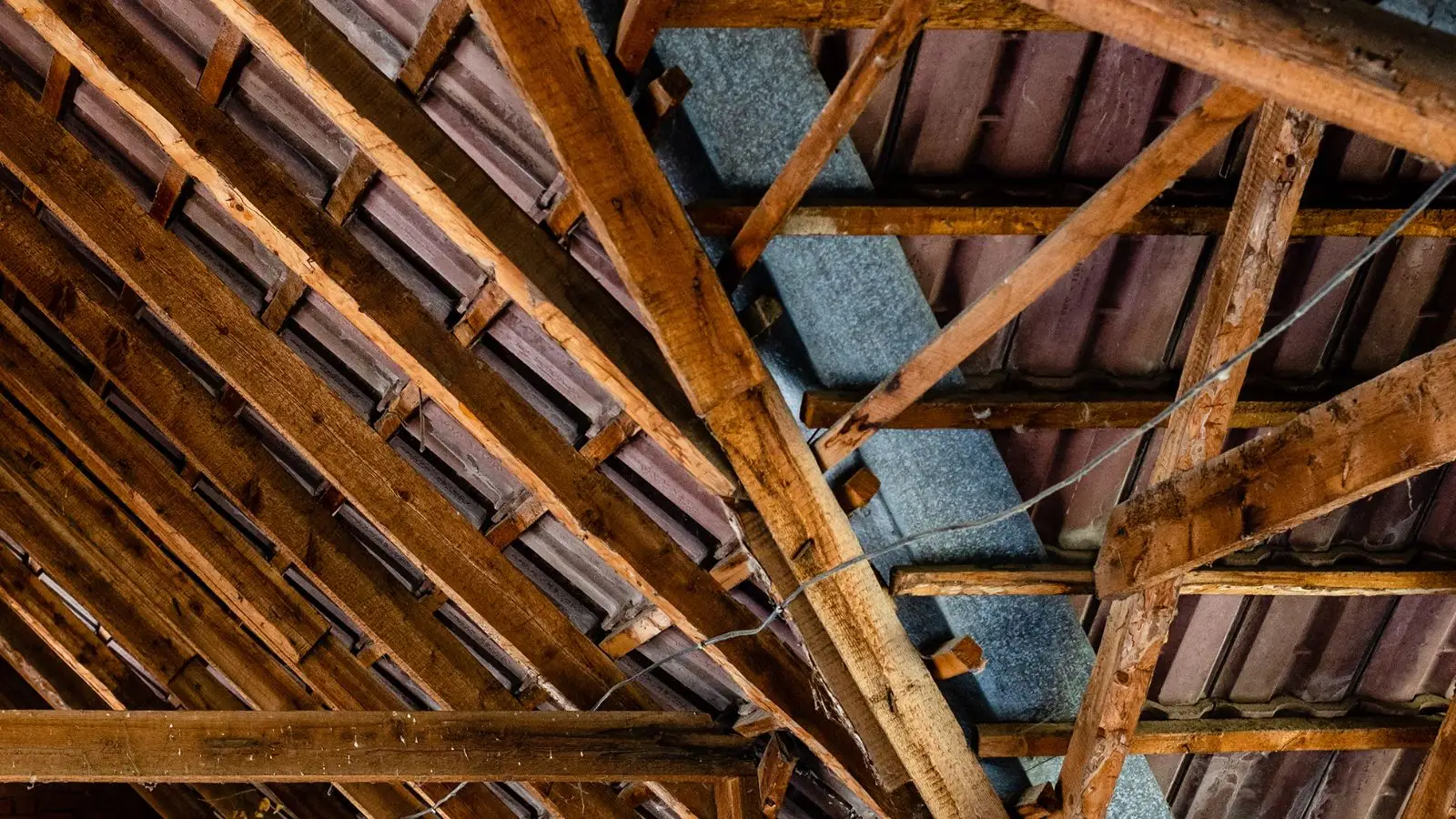
A roof leak rarely stays at the roof. Water enters at a flashing, a cracked tile, a worn seam or a clogged drain, runs along rafters and drops onto insulation, then soaks the ceiling below. By the time a stain shows, the attic side has usually been wet for some time.
Beverly Hills roofs vary a great deal, from flat membrane roofs on condos and shops to tile and shingle roofs on large houses. A flat roof tends to pond water at a failed seam, while a pitched tile roof leaks at flashings, valleys and broken tiles. Each one sends water to a different place inside.
Beverly Hills Rain in Numbers
Beverly Hills has no NOAA normals station of its own. The nearest long record is Downtown Los Angeles, where the National Weather Service Los Angeles/Oxnard office lists a 1991 to 2020 normal of 14.25 inches of rain a year.
The same NWS table shows February as the wettest month at 3.64 inches and January at 3.29 inches, against 0.02 inches in July. A roof that sits dry for most of the year gets tested all at once in winter, which is when failed flashing and cracked tile show themselves.
The NWS table also lists an annual mean temperature of 65.8 degrees Fahrenheit for Downtown Los Angeles, a mild range that lets wet attic insulation stay damp for a long time without freezing or baking dry.
Source type: Sources: National Weather Service Los Angeles/Oxnard, 1991 to 2020 climate normals for Downtown Los Angeles.
What You See and What It Means
| What you see | What it usually means | Urgency |
|---|---|---|
| Brown ring on the ceiling that grows after rain | Water is reaching the ceiling from above and returning each storm | High, call soon |
| Dripping from a light fixture or vent | Water is traveling along framing to the lowest opening | Urgent, avoid the fixture |
| Bubbled or sagging drywall | The ceiling is holding water | Urgent, it can fall |
| Damp, flattened insulation in the attic | A leak has been feeding it for some time | High, it holds water against wood |
| Musty smell in an upper room | Moisture is trapped in the ceiling or attic | Medium, needs drying and inspection |
Roof Leak Safety: What to Do First
Your priorities are people, electricity and contents. A ceiling that is bulging with water can fail suddenly, so stay out from under it. If water is dripping through a light fixture or near a panel, switch off that circuit at the breaker if you can reach it safely.
Keep clear of sagging ceilings
A bulging area can be punctured with a small hole to drain it into a bucket, from the side and not from below. If you are unsure, leave it and call.
Catch and move
Put buckets under drips and move furniture, rugs and electronics out of the area.
Make the electrical area safe
Turn off the breaker for wet ceiling lights and outlets only when you can reach it on dry ground.
Stay off the roof
A wet roof is a fall risk. Call a roofer to cover or repair it.
Photograph and call
Take photos inside and of the roof from the ground, then call us and your roofer.
Ceiling dripping or sagging?
Call the 24/7 line. Crews are sent the same day when one is available.
Our Process for a Leaking Roof Loss
We do not repair roofs. We deal with what the water reached. Crews check the ceiling and attic with a moisture meter and a thermal imaging camera, then remove wet insulation and any ceiling drywall that cannot dry. Open framing is dried with air movers, and LGR dehumidifiers pull the moisture out of the air.
Where a ceiling is wet but intact, small access holes may be cut so air can reach the cavity. Readings are logged until the materials are dry, and the ceiling is only closed once the roofer confirms the opening is sealed. Closing it sooner means the same leak wets new drywall. The EPA advises drying water-damaged materials within 24 to 48 hours to limit mold growth, which is why the attic is not left for later.
What Affects the Cost of Roof Leak Cleanup
The price follows how far the water traveled below the roof. These five factors matter most.
Ceiling area affected
More wet ceiling means more removal and more drying.
Insulation and attic access
Wet insulation must come out, and a tight attic raises labor.
How long it leaked
Repeated storms soak deeper than one event.
Drying days and equipment
Attic and ceiling drying often takes extra days because air has to reach closed cavities.
Rebuild scope
Drywall, texture, paint and the roof repair itself are priced separately.
Coverage often depends on whether the roof was damaged by a covered event or worn out over time. Ask your insurer how your policy treats this kind of loss. Call (424) 550-5662 to describe the ceiling and attic, and the crew will lay out the scope and price first.
Insurance and Roof Leaks
Insurers tend to separate sudden storm damage from long-term wear. A tree limb that punctures a roof is usually treated very differently from a flashing that failed after years of aging. The interior damage often follows the same treatment as the roof cause.
Photograph the roof and ceiling, keep the roofer's written findings and save receipts for temporary protection. Reasonable emergency steps to limit damage are commonly expected of policyholders, so ask your insurer what they want to see.
Mistakes to Avoid With a Roof Leak
- Patching a ceiling stain with paint while the roof still leaks
- Climbing onto a wet roof to look for the hole
- Ignoring wet attic insulation because the ceiling looks dry
- Waiting for a dry week before calling about a stain that keeps returning
- Closing a ceiling before the roofer has sealed the source
Common questions
Yes. Call at night or on a holiday and the line is answered. We handle the soaked interior, a roofer handles the opening, and a crew goes out the same day when available.
No. We remove wet materials and dry the structure. A roofer closes the leak, and we can coordinate timing so the ceiling is closed after the roof is sealed.
Only if you are sure how, from the side and with a bucket ready. If you are not, stay out from under it and call, because a failing ceiling is a safety risk.
Not always, but moisture that sits in insulation and framing can grow mold over time. Drying quickly lowers that risk.
Usually it is removed once it is saturated, because it holds water against the wood. Light dampness may be treated differently, and the crew will check with a meter.
Once the roof is sealed and the cavity is dry, water damage repair rebuilds the ceiling, and mold remediation applies if growth appeared. For storm-driven leaks, see storm water damage. Roof calls come from Beverly Hills and West Hollywood, and the service area page shows how we cover both.