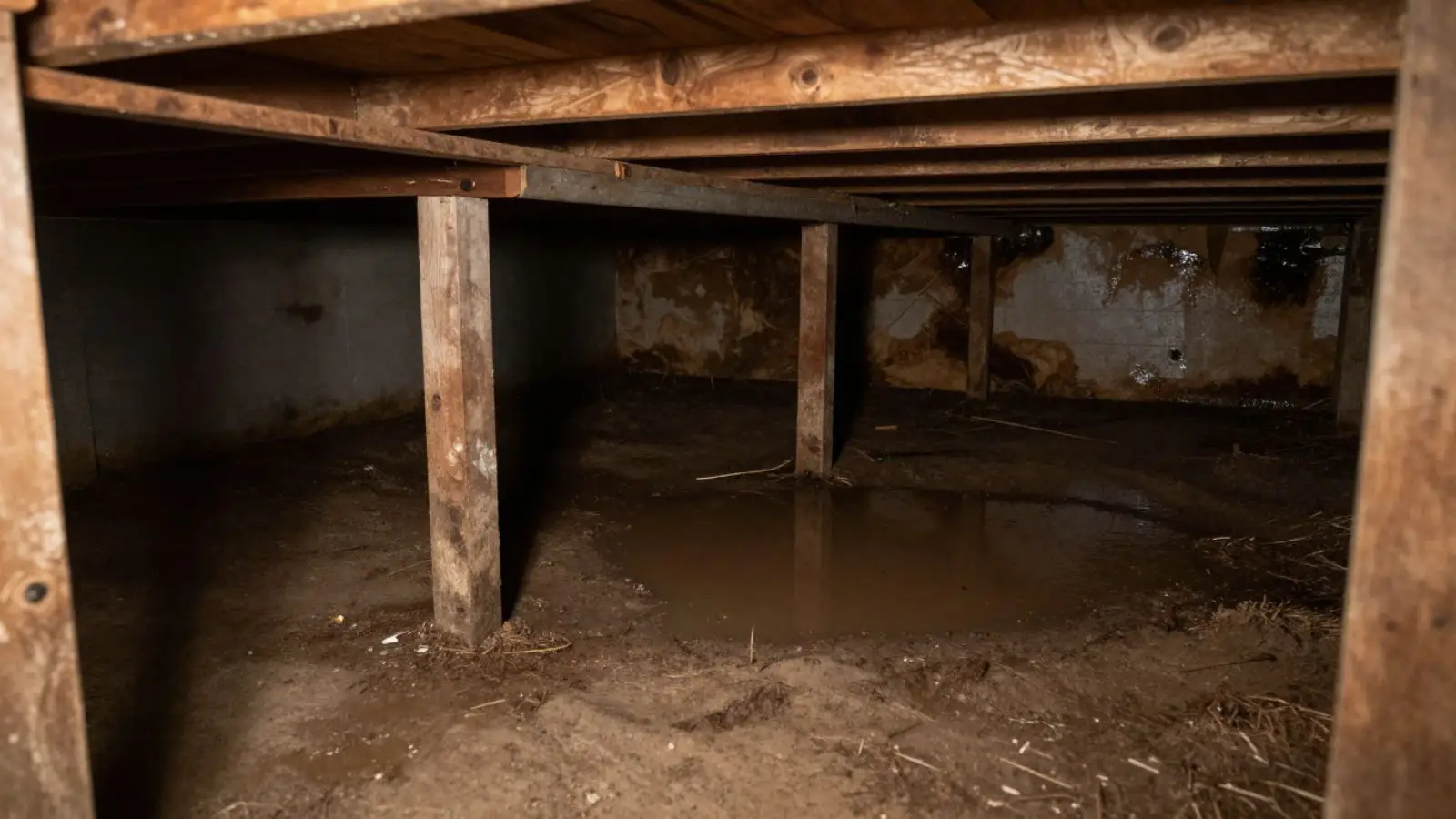
What a Wet Crawl Space Means and How Common It Is Here
A crawl space is the shallow, unfinished area between the ground and the floor framing of a house on a raised foundation. It holds supply lines, drain lines, ducts and sometimes a water heater. When water gets in, it soaks insulation and wood framing and raises humidity under the floors above.
Crawl spaces are one of the less frequent places for a water problem, and we have no local count to give you. They exist under raised-foundation houses and some additions, and when they flood the cause is usually a pipe leak, a drain failure or surface runoff. If your home sits on a slab or has a lower level, a different page may fit better, and we will say so on the phone.
Flood History and Drainage in the City
The City of Beverly Hills Local Hazard Mitigation Plan says flooding events have occurred predominantly in the southeastern and northeastern sectors of the city. Homes in those sectors have more reason to watch what is under the floor after heavy rain.
The same plan describes the southeast section as historically vulnerable to flooding and refers to a Los Angeles County storm drain project at Holly Hill.
The 2020 Urban Water Management Plan counts 170 miles of city water mains, and a leak in a line under a house adds to whatever runoff has already reached the crawl space.
Source type: Sources: City of Beverly Hills Local Hazard Mitigation Plan and City of Beverly Hills 2020 Urban Water Management Plan.
What You See and What It Means
| What you see or notice | What it usually means | What to do |
|---|---|---|
| Standing water seen through the hatch | A leak, drain failure or runoff has entered | Stop the source and call |
| Floors above feel cold, soft or bouncy | The subfloor or joists may be wet | Call for moisture mapping |
| Musty smell rising through vents or floors | Damp materials or early mold below | Call for an inspection |
| Sagging insulation between joists | It has absorbed water and is heavy | Call before it falls |
| Hardwood cupping across a room | Moisture from below is reaching the boards | Call for drying and inspection |
Crawl Space Safety: The First Hour
Do not enter a flooded crawl space by yourself. Hazards include electrical wiring, sharp debris, low clearance and contaminated water if a sewer line is the source. Look from the hatch with a flashlight, take photos and keep children and pets away.
Find the source if you can
A hissing sound or a spinning water meter points to a supply line. Close the main.
Stay out of the space
Wiring, tight clearance and unknown water make entry unsafe without gear.
Turn off power if needed
If water is near the panel, wiring or equipment, switch off that breaker only if you can reach it on dry ground.
Check for sewage
A sewer odor or dark water suggests a drain failure. Treat it as contaminated.
Photograph and call
Photos from the hatch help the crew plan. Call us and a plumber.
Water under the house?
Call the 24/7 line. We will tell you what to check from the hatch and what to leave alone.
How We Dry a Crawl Space
The crew enters with protective gear, lighting and a pump. Standing water comes out first through submersible pumps. A moisture meter and thermal imaging camera then check joists, subfloor and insulation. Wet insulation is removed, since it holds water against the wood.
Air movers and dehumidifiers are set up to dry the space, and the ground vapor is managed where needed. Duct runs and equipment under the floor are checked for water. If the water was not clean, contaminated materials are removed and the area is cleaned and treated. Readings continue until the framing is dry. The EPA advises drying water-damaged materials within 24 to 48 hours to limit mold growth, which is why wet crawl space insulation should not wait.
What Affects the Cost of Crawl Space Water Damage
Access and conditions drive the price here. These five factors matter most.
Access and clearance
Low, tight spaces slow every task.
Water depth and source
Clean leaks differ from sewage or runoff.
Insulation and materials
More wet insulation means more removal.
Drying days
Dry targets for framing set how many days the dehumidifiers stay under the house.
Rebuild scope
Insulation, vapor barrier and floor repair are priced separately.
Coverage often depends on the source. Your policy wording decides, so read it or ask your insurer. Call (424) 550-5662 and describe the hatch view, and the scope and price are talked through before anyone crawls in.
Insurance Fit for Crawl Space Water
A sudden pipe failure under the house is generally treated like other pipe losses, while groundwater and surface flooding are commonly excluded from standard homeowners policies. Sewer backup is its own category and may need an endorsement.
Because the cause decides coverage, a plumber's report matters. Save photos from the hatch, and record when you first noticed the water.
Prevention and Mistakes to Avoid
- Entering a flooded crawl space without protective gear
- Leaving soaked insulation in place after the water is gone
- Sealing the hatch and ignoring a musty smell
- Running a household fan under the house as the only drying step
- Skipping a plumber's check of the supply and drain lines
Common questions
Yes, at any hour. The 24/7 line takes crawl space calls too, and a crew is sent the same day when one is available, in the right gear.
They exist under raised-foundation houses and some additions, and we have no local count to share. If your home has a slab or a lower level, a different page may fit better.
Where the barrier is damaged or needs to be reset, it can be part of the repair. The crew will explain what is needed.
Yes, if framing and insulation stay wet. Quick drying lowers that risk.
Treat it as contaminated, stay out and call. Cleanup then follows contaminated-water steps.
If the water came from a drain line, see sewage backup cleanup. For the broader drying process, see water mitigation. Crawl space calls reach Beverly Hills and West Hollywood, and the service area page lists where we go.