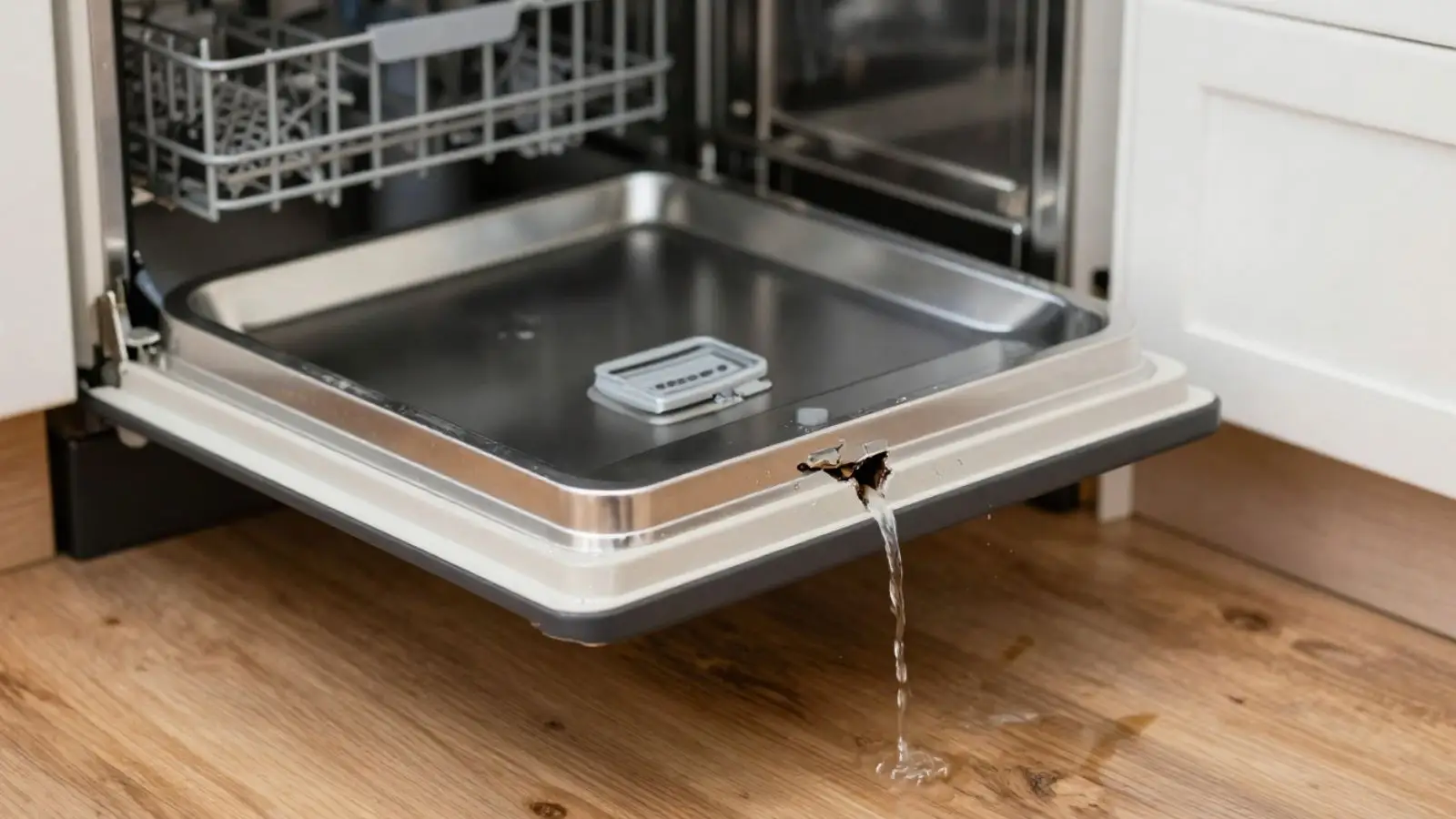
How Appliance Leaks Happen in Beverly Hills Homes
Most appliance leaks start at a hose or a connection, not in the machine itself. A washing machine supply hose bursts at its coupling. A dishwasher inlet valve weeps. A refrigerator ice maker line cracks behind the unit. A drain hose slips off a standpipe during a spin cycle. Water then spreads under the appliance before anyone sees it.
In larger Beverly Hills homes, laundry rooms and secondary kitchens can sit upstairs or far from where people spend time. A leak there can run for hours. In condos, the washer is often on the same floor as a neighbor's ceiling.
Beverly Hills Households and Appliances
U.S. Census Bureau QuickFacts lists 14,449 households in Beverly Hills for 2020 to 2024, with an average of 2.18 people per household. Smaller households can mean a washer or dishwasher runs while nobody is home.
The City of Beverly Hills Local Hazard Mitigation Plan reports that 34,109 residents were housed in 16,394 residential units as of the 2010 Census. With that many units, a large share of buildings are multi-family, which is why a hose failure can reach the unit below.
The Census Bureau's July 2025 population estimate for the city is 30,764 people.
Source type: Sources: U.S. Census Bureau QuickFacts and the City of Beverly Hills Local Hazard Mitigation Plan.
What You See and What It Means
| What you see | What it usually means | What to do |
|---|---|---|
| Puddle in front of a washer | A hose, drain line or door seal is leaking | Close the supply valves and unplug |
| Cabinet base swelling under a dishwasher | Slow inlet or door leak soaked the cabinet | Call for moisture mapping |
| Damp floor behind a refrigerator | Ice maker or water line is leaking | Close the line valve and pull the unit out if safe |
| Ceiling stain below a laundry room | Water got through the floor | Shut the supply and call fast |
| Floor boards lifting near the appliance | Water has been soaking in for days | Call for drying and inspection |
Appliance Leak Safety: The First Hour
Close the supply valves behind the machine. Washers usually have a hot and a cold valve, and dishwashers and ice makers have a small shutoff under the sink or behind the unit. If you cannot reach them, close the main valve. Then handle the electrical side with care.
Stop the water
Close the appliance valves or the main shutoff.
Unplug only if safe
Pull the plug only when the floor around the outlet is dry. If it is wet, switch off the breaker instead.
Pull the unit out slowly
Moving a heavy washer through water can hurt your back and tear hoses. Wait for help if needed.
Take photos
Photograph the hose, the model label and the wet floor before you wipe anything.
Call us and a repair tech
We dry the structure. A technician or plumber fixes the appliance or line.
Appliance water spreading under cabinets or floors?
Call the 24/7 line. We will tell you how to slow it while a crew is sent.
How We Dry Out After an Appliance Leak
Water from an appliance is often clean at first, but a washer drain can add soap and lint. We extract standing water, then use moisture meters under and around the area. Cabinet toe kicks, floor edges and the cavity behind the appliance are checked, because those areas stay wet longest.
Where flooring has water trapped beneath it, small openings or drying mats may be used to pull moisture out. Air movers and LGR dehumidifiers run with daily readings. Particleboard and laminate cabinet bases swell and rarely recover, so some pieces may need replacement. Drying targets follow the ANSI/IICRC S500 standard as a reference.
What Affects the Cost of Appliance Leak Cleanup
Appliance leaks vary from one wet corner to a flooded level. These five factors matter most.
How long it leaked
A leak found at once costs less than one that ran overnight.
What sits under the leak
Cabinets, hardwood and tile on wood subfloor dry differently.
Area affected
More wet floor and wall area means more equipment.
Drying days
Cabinet toe kicks and floor edges set how long the dryers have to run.
Rebuild scope
Cabinet, flooring and trim replacement is priced separately.
Coverage often depends on how sudden the leak was. Your insurer, not us, decides coverage, so check the policy first. Dial (424) 550-5662 and describe the appliance and floor, then the scope and price are talked through first.
Insurance Fit for Appliance Leaks
Insurers generally cover water damage from a sudden appliance discharge more readily than damage from a leak that ran slowly for months. The appliance itself is usually not covered by the home policy. Your policy text decides, and your insurer makes the call.
Keep the failed hose if you can, along with the appliance model and age. Those details help show what failed and when.
Prevention and Mistakes to Avoid
- Leaving a washer running while nobody is home
- Keeping rubber supply hoses long past their age
- Pushing a leaking appliance back into place and covering the floor
- Ignoring a damp cabinet base under a dishwasher
- Skipping a drain pan under an upstairs washer
Braided stainless steel supply hoses and a simple leak sensor on the floor can cut the risk. Replacing hoses when you buy a new appliance is a cheap habit.
Common questions
Yes, and it uses the same round-the-clock line. When a crew is available it goes out that day, and the dispatcher tells you how to slow the water first.
No. An appliance technician or plumber repairs it. We extract water and dry the structure.
Solid wood sometimes can. Particleboard and laminate bases that have swollen usually have to be replaced.
Water often reaches the ceiling below. Check ceilings for stains and call quickly, because the cavity above is wet too.
A washer drain adds soap and lint, and a dishwasher drain adds food residue. The crew will treat it accordingly.
For leaks that start at a sink or counter, see kitchen water damage. If the heater is the source, water heater leak cleanup covers that. Appliance calls are answered for Beverly Hills and West Hollywood. See the service area page for details.