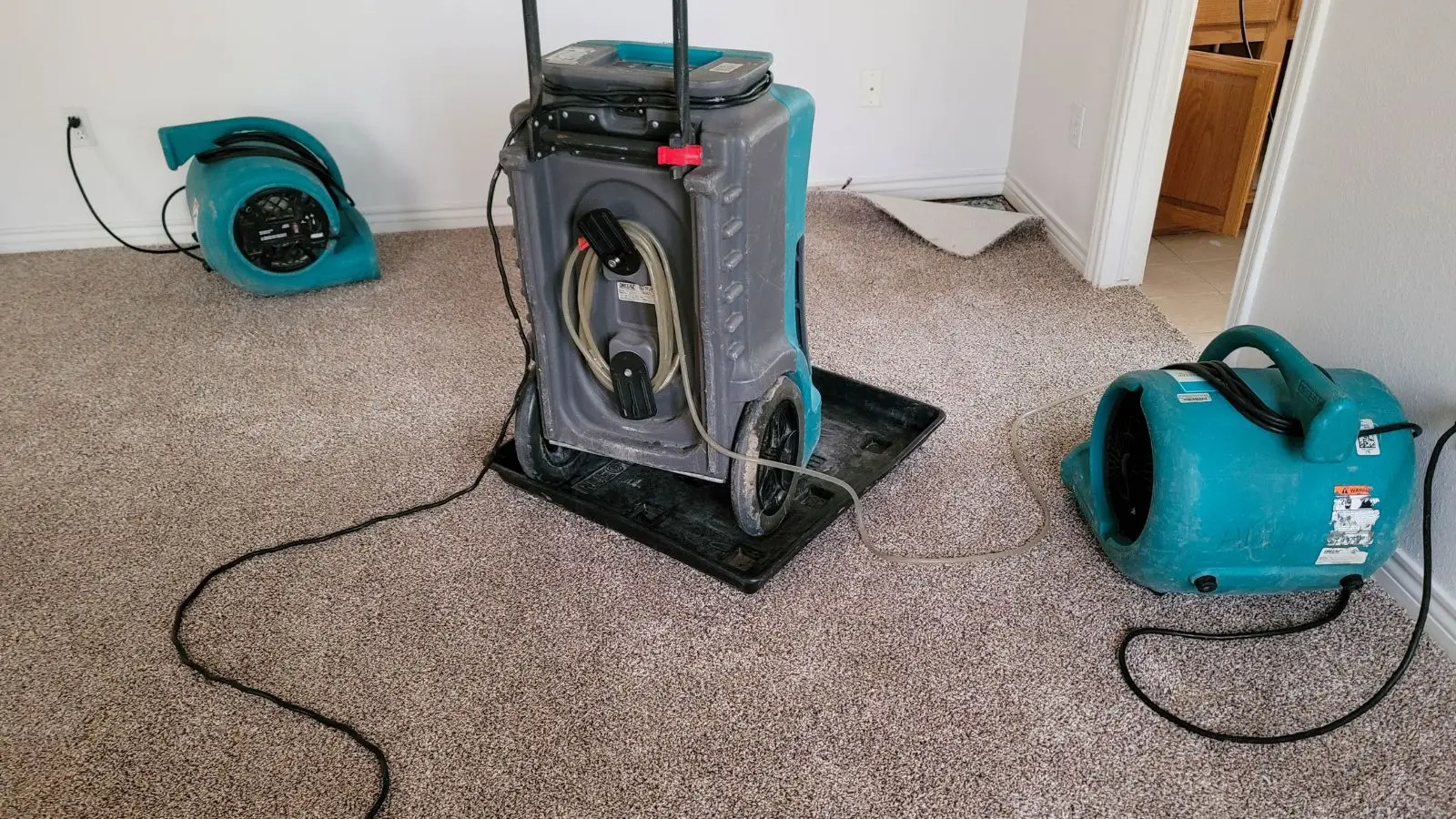
What Structural Drying Is and Why It Is Different
Structural drying is the controlled removal of moisture from the building itself: framing, subfloor, drywall, plaster, concrete and insulation. It follows the removal of standing water and is measured, not guessed. A room that feels dry may still have wet material behind the paint or under the floor.
This page covers the drying process. Water mitigation covers the broader first response, including stopping the spread, and cleanup covers contamination. Here the focus is the science of drying: what equipment does, how it is placed and how the crew knows when to stop.
Climate and Permits That Shape Drying
National Weather Service Los Angeles/Oxnard normals for Downtown Los Angeles list a mean July temperature of 73.3 degrees and 74.7 degrees in August. Warm air holds more moisture, so dehumidifiers matter even in a dry looking climate.
After drying, rebuilding may need a permit. The City of Beverly Hills Building and Safety page lists its permit center at 455 N. Rexford Drive, first floor, and says to call (310) 285-1141 to schedule an appointment.
Walk-in counter service is Monday to Thursday from 8:00 to 10:00 in the morning, with appointments in the afternoons and all day Friday.
Source type: Sources: National Weather Service Los Angeles/Oxnard and City of Beverly Hills Building and Safety page.
What You See and What It Means
| What you see or notice | What it usually means | What to do |
|---|---|---|
| Musty smell days after water was removed | Material is still damp | Call for readings |
| Baseboards or trim pulling away | Wet drywall or subfloor behind | Call for moisture mapping |
| Cupping hardwood or lifted tile | Moisture is trapped beneath the surface | Call for drying |
| Cold, damp feel on a wall | Evaporation or water in the cavity | Call for thermal imaging |
| Paint bubbling a week later | Water is still moving through the wall | Call before repainting |
Structural Drying Safety: Before the Equipment Arrives
Drying equipment runs for days and draws power, so basic safety matters. Keep cords off wet floors, do not run extension cords through standing water and avoid plugging equipment into wet outlets. If the loss involved contaminated water, cleanup comes before drying.
Stop the source
A running leak undoes any drying.
Check the power
Equipment needs safe, dry circuits. If outlets are wet, turn off that breaker.
Remove standing water first
Drying works on moisture that remains after extraction.
Clear the room
Move small furniture so air can reach floors and walls.
Tell us what was wet
Include the date, the source and any water that was not clean.
Water gone but not sure the structure is dry?
Call the 24/7 line. Readings tell the real story.
How We Dry a Structure
The crew starts with moisture mapping: a meter on each material and a thermal imaging camera on the wall surfaces. Readings are recorded as a baseline. Air movers are placed to move air across wet surfaces, and LGR dehumidifiers remove the moisture from the air so the drying keeps going.
A hygrometer tracks temperature and humidity in the room. Where cavities are closed, small holes or removed baseboards let air in, and drying mats can pull water from hardwood or subfloor. Desiccant dehumidifiers may be used in cool or very damp conditions. Readings are taken daily, and equipment is moved or removed as materials reach dry targets. Drying is done when readings say so. The ANSI/IICRC S500 standard is the published reference for how drying is measured and recorded.
Map the moisture
Meters and a thermal camera locate wet materials and record a baseline.
Set the equipment
Air movers and dehumidifiers are placed to match the wet area.
Open what must breathe
Cavities, baseboards and flooring are opened where needed.
Monitor and adjust
Daily readings guide equipment changes until dry targets are met.
What Affects the Cost of Structural Drying
Drying cost follows equipment and time. These five factors matter most.
Wet area and volume
More wet material needs more air movement and dehumidification.
Material type
Concrete, plaster and hardwood dry slower than drywall.
Humidity and conditions
Damp, still or cool air slows drying.
Days on site
Equipment count and days set much of the cost.
Monitoring visits
Daily readings are part of the work.
Coverage often depends on the cause of the water. Whether it is covered depends on your policy, which your insurer can explain. Call (424) 550-5662 and the drying plan, equipment count and monitoring visits are explained before setup.
Insurance and Drying Documentation
Drying records are among the most useful documents in a claim. A log that shows starting readings, equipment, daily readings and the finish proves what was wet and how it dried. Your insurer decides what is covered, but the record explains the work.
Keep copies of daily readings and photos of the equipment in place. If a policy has a time limit for reporting, report promptly.
Mistakes to Avoid During Drying
- Turning equipment off early because the room feels dry
- Closing the windows and the equipment's air flow
- Moving air movers to a different place without telling the crew
- Painting or installing flooring before a dry reading
- Skipping the daily readings
Common questions
Yes. Drying can begin as soon as the water is out, and the 24/7 line sends a crew the same day when one is available.
It depends on the materials, the amount of water and the conditions. Readings decide when it is complete.
Air movers and dehumidifiers make noise, and they run continuously. The crew can discuss placement and timing.
Usually not. Dehumidification works best in a controlled space, and the crew will tell you.
Readings from moisture meters compared with a dry reference for each material.
For the full first response, see water mitigation. After drying, water damage repair rebuilds what was removed. Drying work runs in Beverly Hills and West Hollywood, and the service area page explains coverage.